The Origin Story (Spoiler: It Begins With an Accordion Salesman)
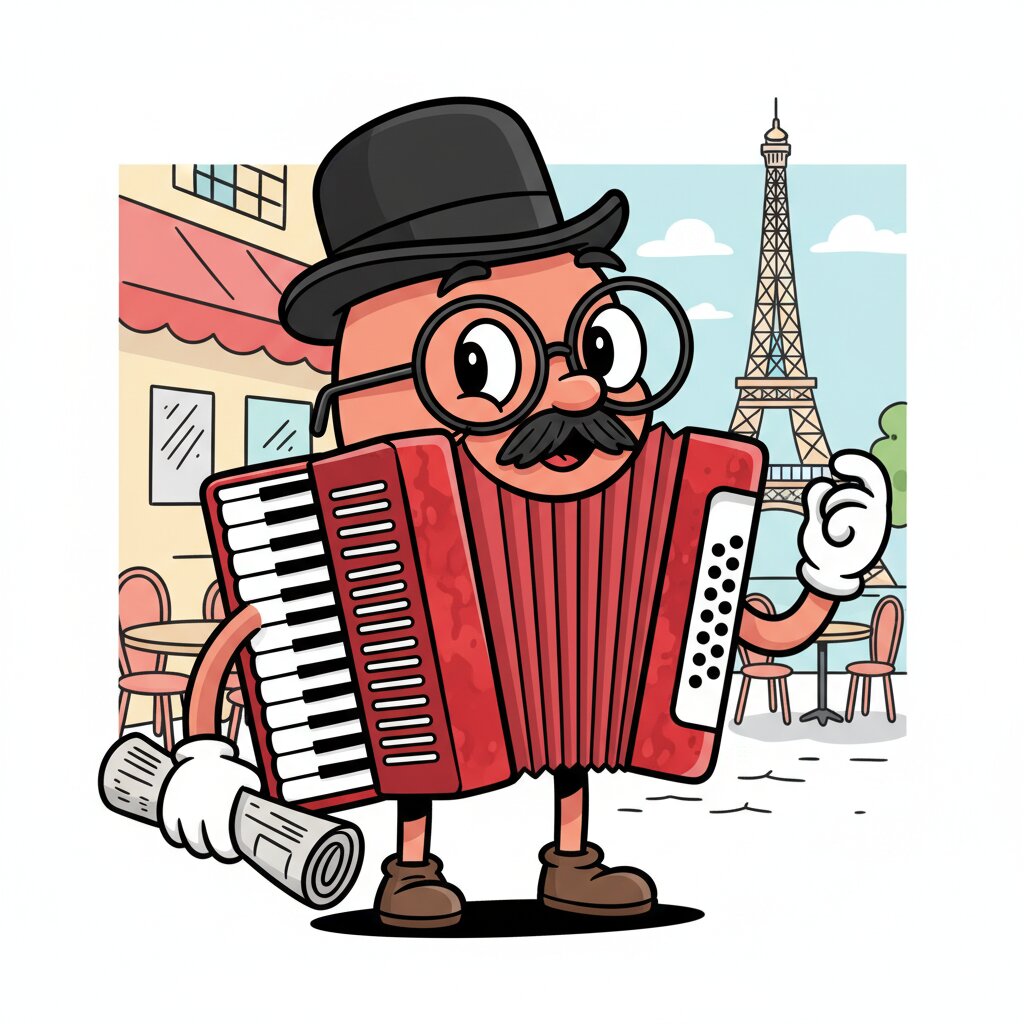
It is 1965. Alfred Matthew Yankovic is six years old. There is a knock on the family door in Lynwood, California. The man on the other side is selling accordion lessons. The Yankovics — Nick and Mary — decide accordion lessons would be wonderful for their only child, because that is the kind of decision parents made in 1965. Al gets one lesson, switches to a different teacher, and proceeds to practice accordion in his bedroom for the next twelve years, which, statistically, is approximately how long it takes to develop a deep personal relationship with a squeezebox.
His parents thought it might give him "a way to make a living." Reader: it did.
Phase One: Bathrooms and Dr. Demento
While in college at Cal Poly San Luis Obispo (studying architecture, of all things), Al began recording original songs into a tape deck in the campus radio station bathroom — chosen specifically for its excellent reverb. He mailed his recordings to the syndicated novelty-music DJ Dr. Demento, who played them. America's tape decks were never the same.
His first single, "My Bologna" — a parody of The Knack's "My Sharona" — was recorded in the bathroom across the hall from the radio station. It got him a record deal. The accordion did most of the heavy lifting. Some kid at Capitol Records said, "Sure, why not." That kid is now a millionaire.
 GalaxyCon 2025
The Polka Medley Innovation
Here is the part that earns him a place in the Polkamania pantheon. In 1984, on his second album "Weird Al" Yankovic in 3-D, Al recorded "Polkas on 45" — a six-minute medley of contemporary pop hits arranged in polka style, in homage to the Stars on 45 disco medleys popular at the time.
It was supposed to be a one-off. It became the bit. A polka medley has appeared on every studio album he has made since, with the lone, glaring, headline-grabbing exception of 1988's Even Worse, an absence so notable that fans have been writing apologetic letters about it for almost forty years. Beyond the studio albums, Al has released three additional polka singles: the all-Pokémon-names Polkamon (1999), the fifteen-song Hamilton Polka (2018), and the recent Polkamania! (2024) — which, in a cosmic coincidence, happens to share the name of the domain you are currently reading. (We registered it in 2020. Al got there in 2024. We bow respectfully.) The full canon: all 15 polkas, here.
These are not throwaway tracks. They are elaborate. Each one is a tight three-to-six-minute time capsule of pop culture, run through an accordion and oompah brass at 180 BPM with key changes every twenty seconds. They are, in a real sense, the most ambitious format Al has ever attempted, because to make one work he has to license every single song he covers. Try negotiating thirty separate publishing deals next time you want to make a wedding playlist and you'll understand what we mean.
The Hawaiian Shirt Era and Why It Matters
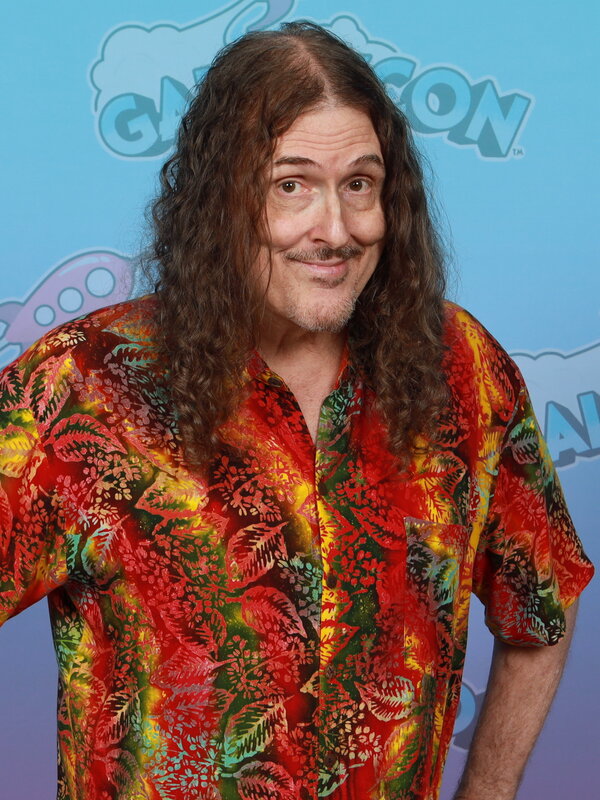
By the late 1990s, Al's iconic look had settled into Hawaiian shirts, long curly hair, and a permanent expression of cheerful mischief. The shirts are not a joke. They are a working uniform. Al has reportedly accumulated a closet of several hundred of them, organized by color family. The man has a system.
The look did something subtle and important for polka: it made the genre look fun. Weddings and church halls had long associated polka with formal band uniforms, sequined jackets, and a certain amount of starch. Al rolled up in a Hawaiian shirt and made it the rock-and-roll equivalent of saying "this is going to be a good time."
Five Grammys, Sixteen Hot 100 Singles, and the Hardest Working Accordion in Show Business
The trophy room, in summary:
- Best Comedy Recording (1985) for "Eat It"
- Best Concept Music Video (1989) for "Fat"
- Best Comedy Album (2004) for Poodle Hat
- Best Comedy Album (2015) for Mandatory Fun, which debuted at #1 on the Billboard 200 — the first comedy album to do that in 50+ years
- Best Boxed or Special Limited Edition Package (2019) — for the actual physical packaging of Squeeze Box: The Complete Works of "Weird Al" Yankovic, which was shaped like, you guessed it, an accordion
An honorable mention to "Polka Face" (2011), which earned a Grammy nomination for Best Pop Instrumental Performance, in a category that was 100% serious about the nomination. The accordion has finally been recognized as a legitimate pop instrument by The Recording Academy. We have it in writing.
The Things About Al That Sound Made-Up But Aren't
- He has a degree in architecture. Cal Poly. With honors. He could have designed a building. He chose to write "Like a Surgeon" instead.
- He does not drink alcohol. The man who soundtracked your college years has never had a beer.
- His parents tragically passed away the morning of a 2004 concert in Wisconsin. He performed the show anyway, because, in his words, "making people happy is the best therapy I have."
- He has a Hollywood Walk of Fame star, granted in 2018, located on Hollywood Boulevard. Yes, the accordion is depicted.
- He once turned down a song by Prince. Repeatedly. Allegedly Prince once sent him a request to stop making eye contact at an awards show, which is too good a story to verify too rigorously.
- He has parodied more than 150 songs across his career and has, by all accounts, never once made a parody without the original artist's blessing. He doesn't have to. He just thinks it's the right thing to do. Which it is.
Why Weird Al Matters to Polka, In One Paragraph
Polka was, by 1984, a genre in danger of being remembered fondly. It was your grandparents' music. It had a robust regional scene in the upper Midwest and pockets of Texas and the South, but to mainstream American culture, polka had become a punchline. Then a 24-year-old in a Hawaiian shirt got on MTV and played accordion fast, and millions of kids learned that polka was actually a delivery system for joy. He didn't save polka — polka was never dying, only being ignored — but he made it absolutely impossible to ignore. He smuggled it back into the conversation, one Grammy at a time.